


TL;DR
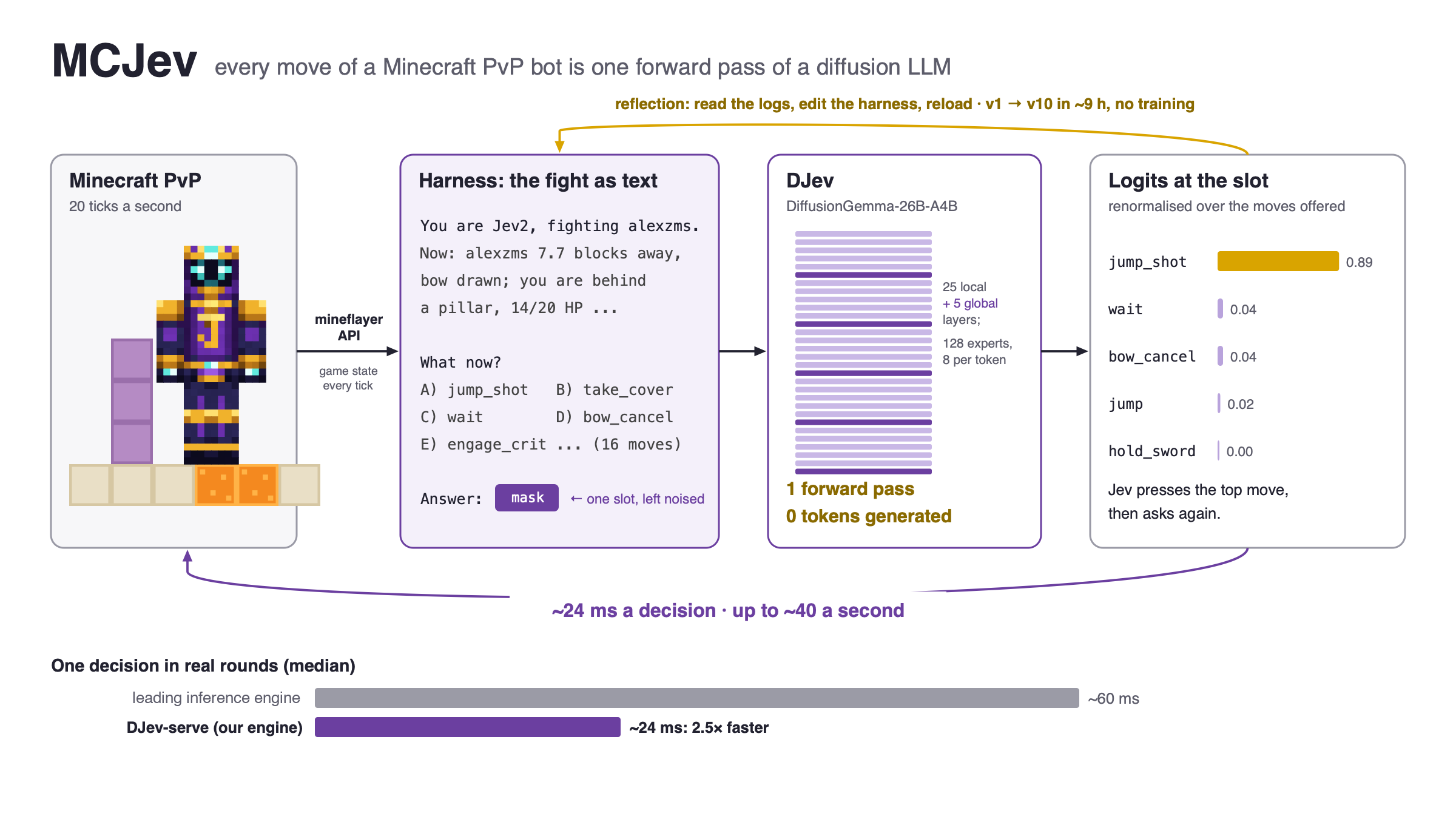
- What we built. MCJev: an agent that makes every move with a Jev-style model (DJev) in one forward pass, tested against real people in Minecraft PvP.
- Self-evolves on a complex task, no training. With a SOTA LLM agent and human supervision, we evolve the prompt rapidly from the bot’s own logs. In under two hours, the bot went from losing every bench round against a scripted fighter at full skill to winning every one.
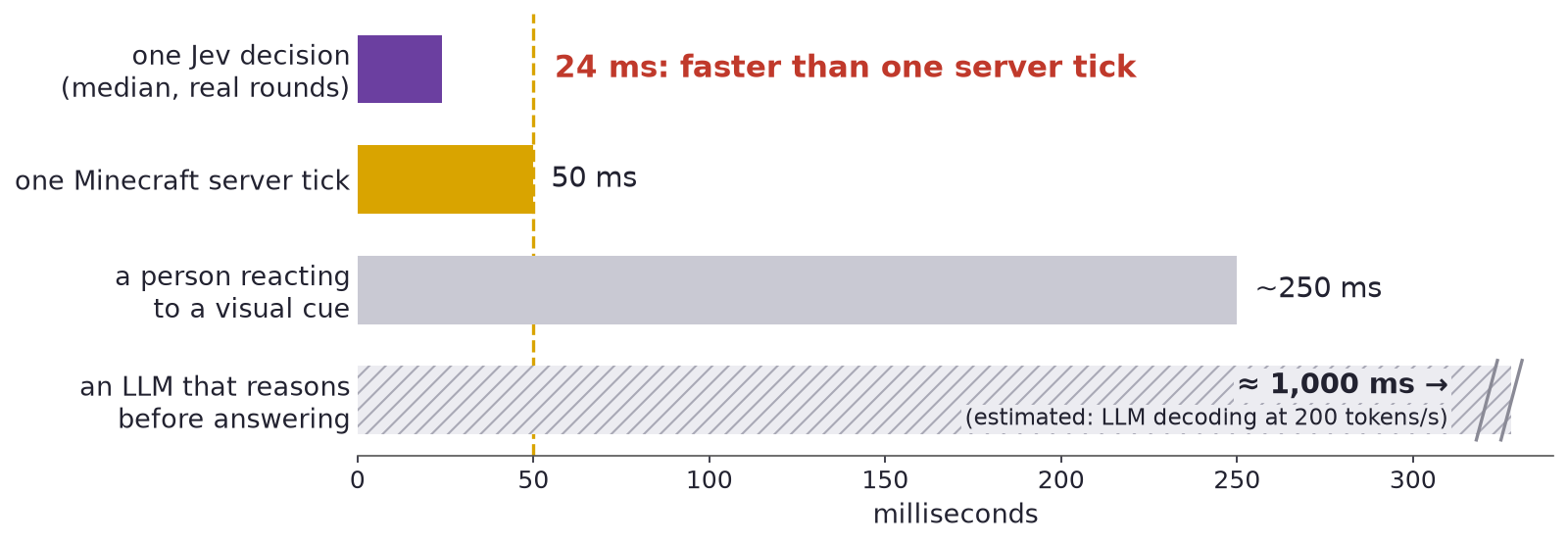
- 24 ms per decision on NVIDIA Blackwell. Our engine, DJev-serve, is 2.5× faster than a leading inference engine.
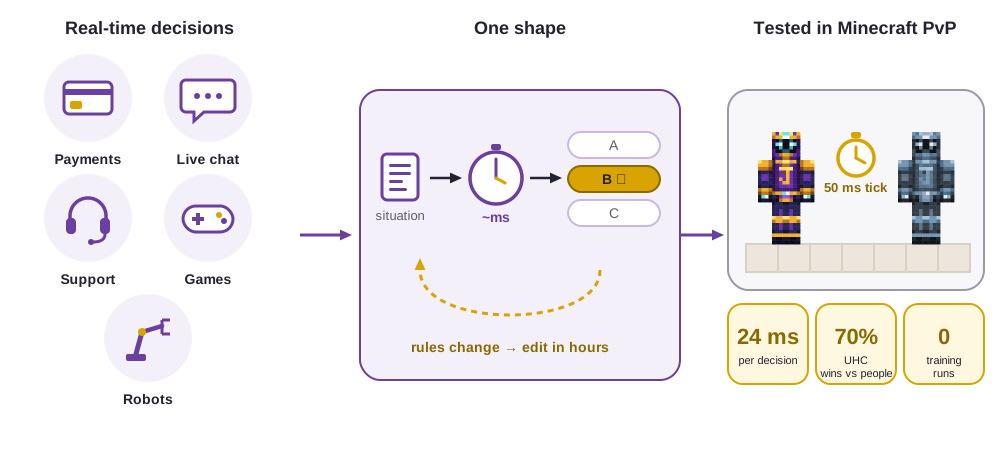
- Tested against real people, at scale. 54 people played 1,795 public rounds in 32 hours, and Jev won 70% in Block UHC. A first step toward real-time AI and physical AI.
We collaborated closely with Pen Chung Li at NVIDIA on MCJev. MCJev runs on NVIDIA GB200 NVL72 and B200 GPUs provided by NVIDIA. We are deeply grateful for their support.
The Problem: Real-Time Decisions
How It Evolves
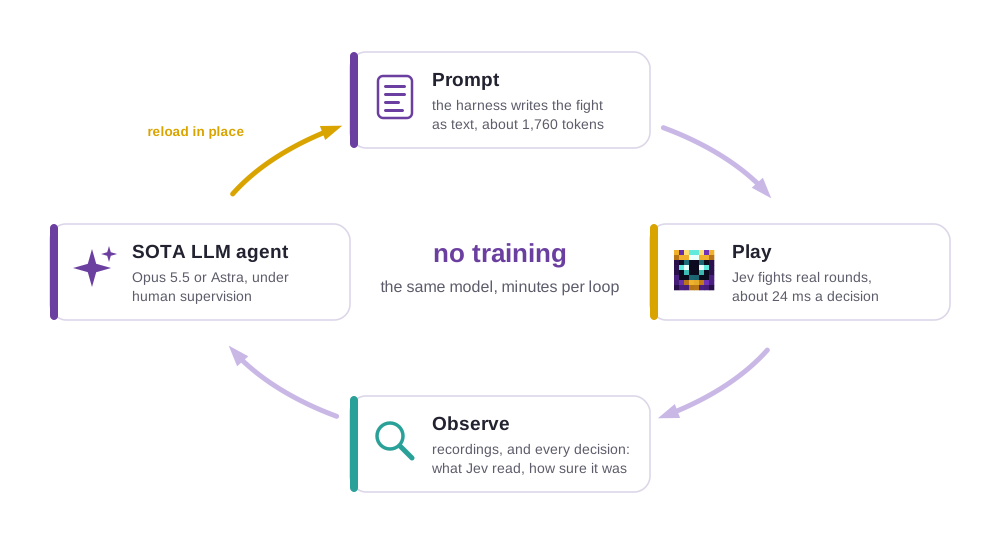
- Prompt. Every tick, the bot reads the game and works out the facts in code (distances, reach, damage, cover). The harness writes them into a prompt of ~1,760 tokens and offers only the moves that make sense right now, each saying what it would do.
- Play and observe. Jev plays real rounds. Each round leaves a recording of both sides and a log of every decision: the prompt Jev read, DJev’s full distribution over the options, and what happened next.
- Evolve the prompt. We go through the logs with a SOTA LLM agent (Claude Opus 5.5 or GPT-6 Astra). It finds where Jev went wrong (a fight it misread, a move it was not offered, a question asked at the wrong moment, a call that should have been a reflex) and drafts a new prompt, and new reflexes for the bot where needed; we review each change and choose what to play next.
- Reload. The bots load the new harness in place, with no restart and no retraining, and the loop runs again.
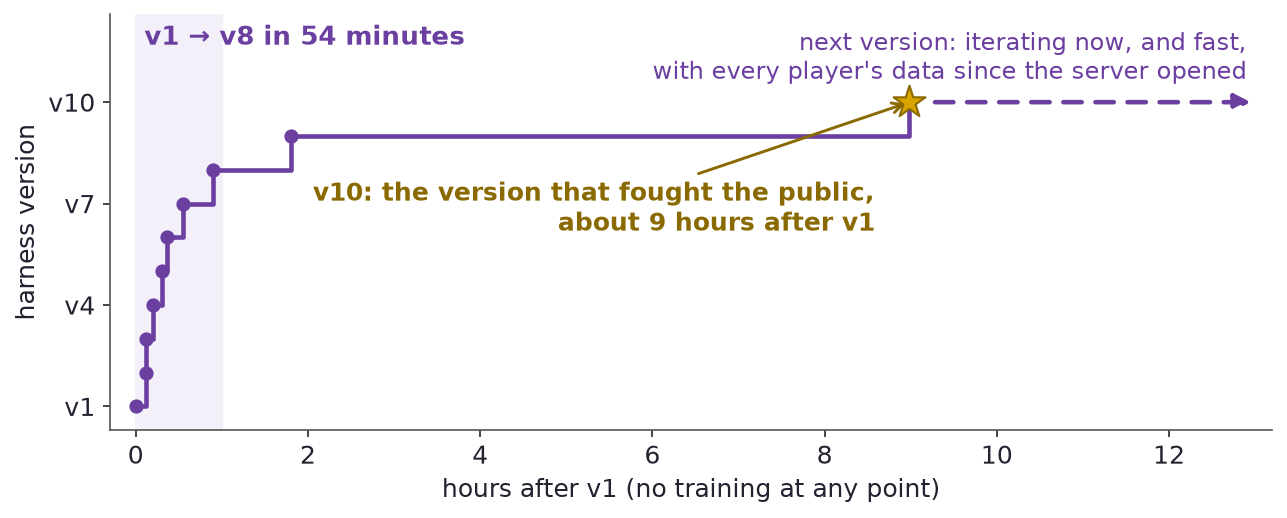
Did it get better? Block UHC is complex enough that the first harness lost. We benchmarked versions against the same scripted opponent, a fighter bot at full skill, three rounds per version: v1 lost all three, v6 won two, and v9, under two hours after v1, won all three. Against people, v10 went on to win 70% of 870 Block UHC rounds (How It Performs). The bench is small, and not everything improved: against a scripted archer, v9 still won only 2 of 14.
What it cost. v1 to v8 took 54 minutes, v10 came about nine hours after v1, and the agent went from its first line of code to a public release in about a day (Figure 4). Every change was a text edit and a reload: no data collection, no labels, no backpropagation, and the same off-the-shelf model throughout. Nothing in the loop is specific to games: any job where a Jev-style model reads a state, picks from options and leaves a log of how its choices turned out can be iterated the same way. We are now iterating on the next version, and it will be fast: since the server opened, the loop has the rounds and decisions of every player who fought Jev to learn from.
How It Works
How Fast It Runs
Decide without decoding
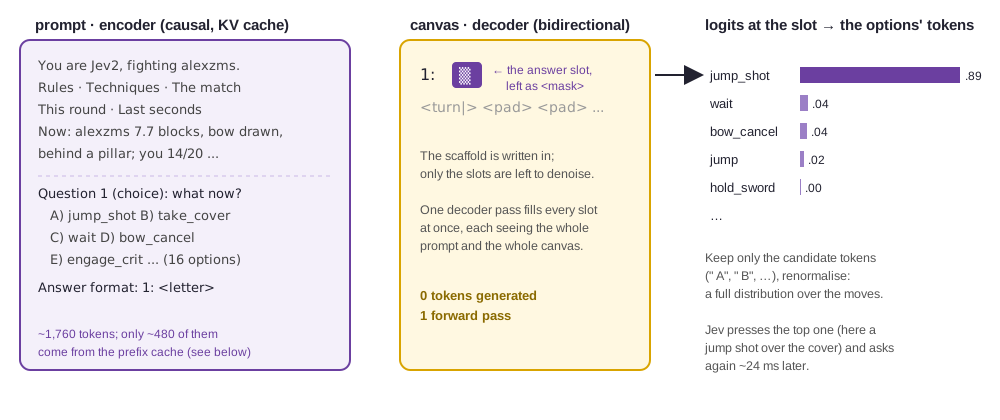
Chat models answer by writing, one token at a time; for a choice among sixteen options that is wasted work. DJev asks a diffusion language model for the answer differently. DiffusionGemma pairs a causal encoder, which reads the prompt into a KV cache, with a bidirectional decoder that denoises a “canvas” (we serve 64 tokens of it). A Jev-like read writes an answer scaffold into the canvas (1: ▒, one slot per question), runs a single decoder pass, and at each slot keeps only that question’s candidate tokens ( A, B, …) and renormalises (Figure 6). That is the full probability distribution over the options, with no token ever sampled. This is how DJev works: mmastrac’s Jev-style decision server for DiffusionGemma, built on the structured reads he added to vLLM (#57250, #58216).
DiffusionGemma used this way is very good at reading a situation and choosing (in our probes, device selection, maze safety from a small view and email triage all scored 0.95–1.0), but it will not do arithmetic for you; the harness does the numbers and hands the model the conclusions.
The inference engine
Our contribution on NVIDIA Blackwell:
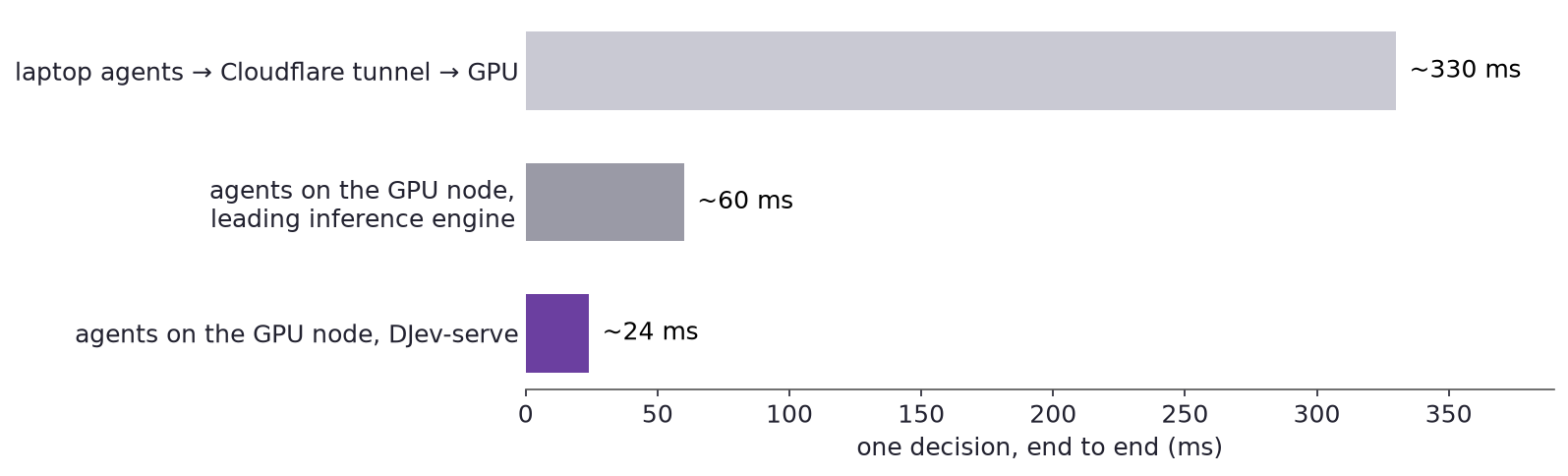
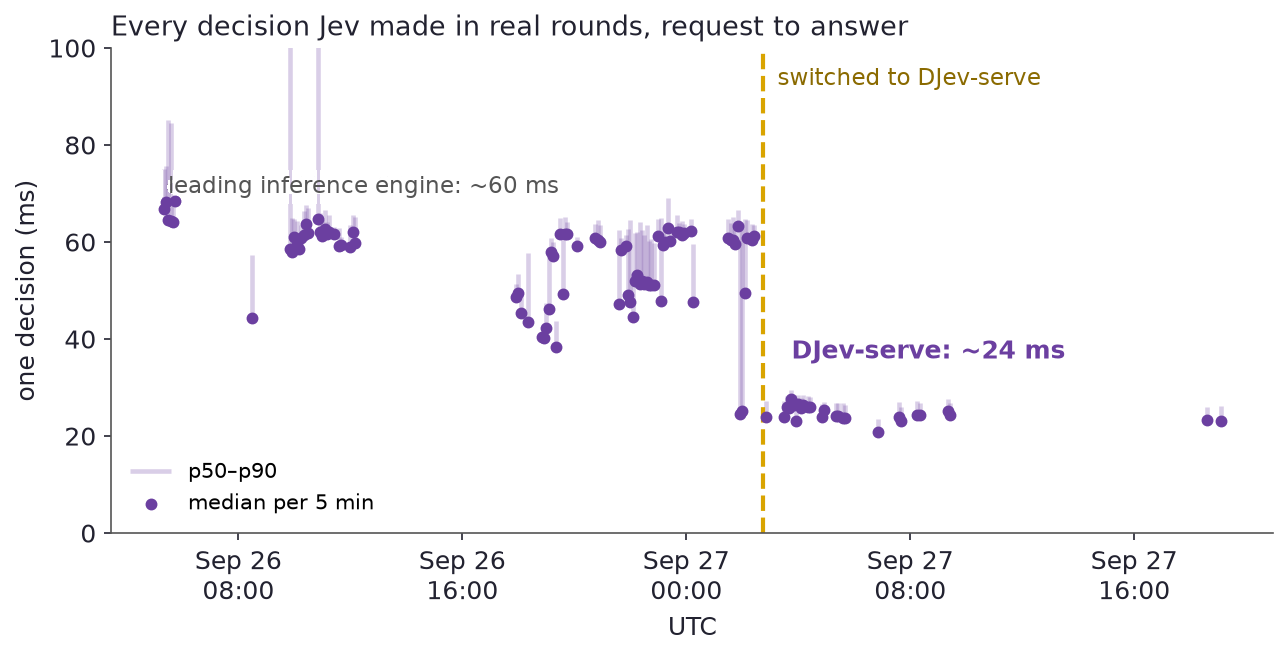
- DJev-serve: a Jev-style read as one forward pass replayed from a CUDA graph, 2.5× faster than a leading inference engine: ~24 ms a decision in real rounds, against ~60 ms.
- Blackwell kernel choices for DiffusionGemma: FlashAttention-2 for the sliding-window layers, a tuned Triton kernel for the global layers, and CUTLASS grouped GEMMs through FlashInfer for the 128-expert MoE.
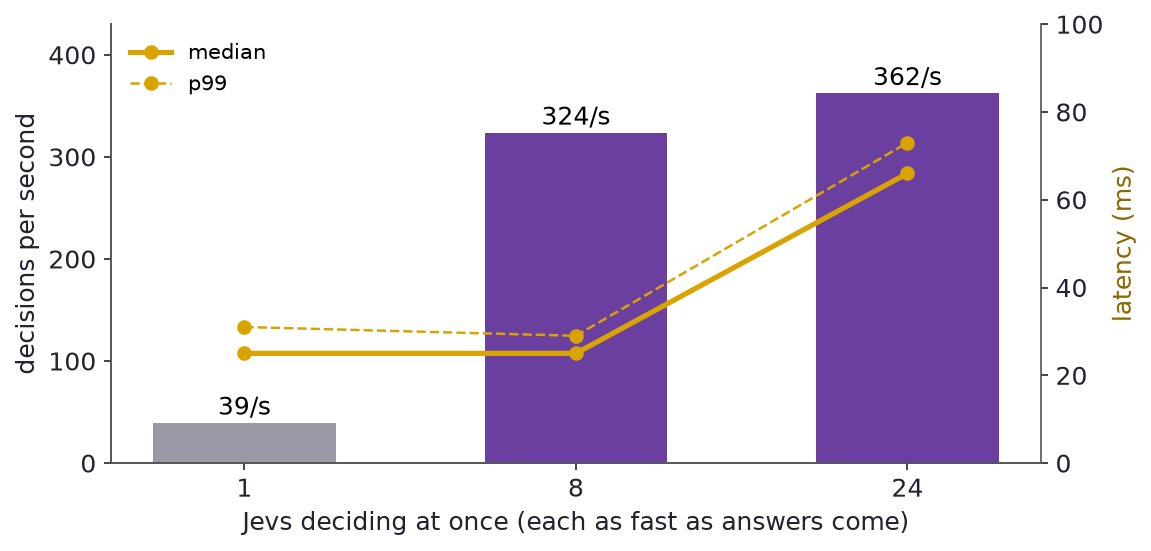
- A public serving pool on GB200 NVL72 and B200: about 360 decisions a second on eight GB200 GPUs, around the clock.
- All of it open source, with NVFP4 as the next step.
Three stages of serving the same model:
| One decision | What changed | |
|---|---|---|
| Hugging Face transformers | 174 ms | the first working version |
| a leading inference engine with the structured read (DJev) | ~60 ms | no generation loop, but general-purpose scheduling |
| DJev-serve | ~24 ms | one forward pass per decision, captured in a CUDA graph |
(174 ms: the first prototype on one NVIDIA GB200, a short test request; it never served real rounds. ~60 and ~24 ms: medians in real rounds (Figure 12). On a controlled benchmark, the same recorded request with the same weights on one NVIDIA B200, DJev-serve is the same 2.5× faster.)
Where the time went. The first version launched 10,340 kernels per forward, mostly tiny glue around 30 layers, and kept the GPU busy for only a third of the time; 8 requests batched together took barely longer than one. DJev on the leading inference engine removes most of that, but still runs prefill and denoise as two scheduled steps over the full canvas width.
DJev-serve. We built it by autoresearch: an AI coding agent ran most of the profile, change and benchmark loop, while we chose what to try next and checked every number. It keeps vLLM’s model code, paged KV cache and attention kernels, drops the scheduler, and computes the same read in exactly one forward pass:
- One CUDA graph from token ids to answer log-probs, one per prompt-length bucket; per decision we fill two small index buffers and replay.
- A prefix cache inside the graph: each request reuses the KV of the longest block-aligned prefix it shares with a recent prompt, and the prefix length is just data in the index buffers.
- FlashAttention-2 for the 25 sliding-window layers (about 4× faster per layer than the Triton attention kernel on Blackwell); the 5 global layers (head size 512) stay on a tuned Triton kernel.
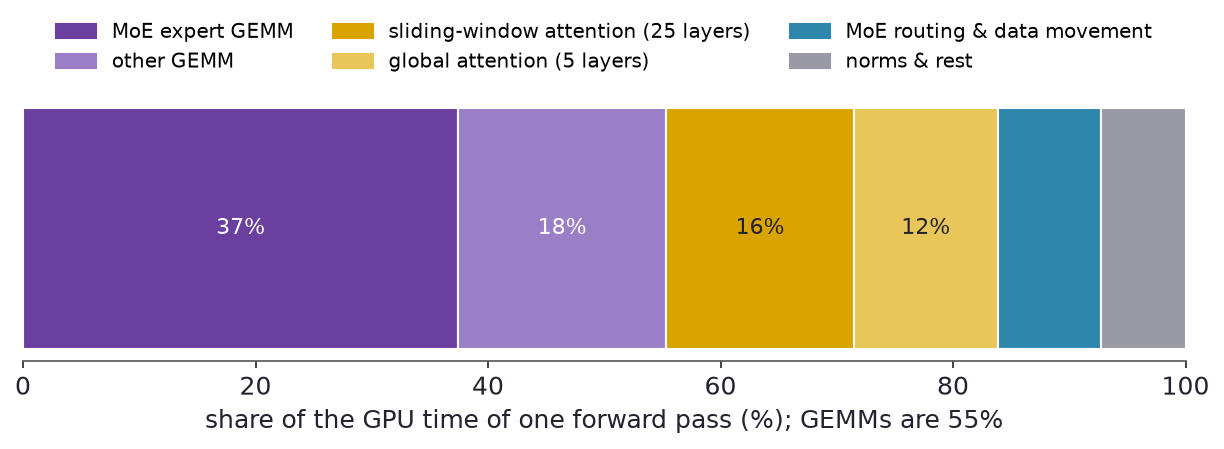
- NVIDIA kernels for the MoE, the largest share of each forward (Figure 7): CUTLASS grouped GEMMs through FlashInfer, 7% faster than the Triton MoE kernel.
The result is ~24 ms a decision in real rounds, request to answer, most of it the GPU forward itself, so the bottleneck is now the GPU. The raw benchmark numbers, versions and the full layout are in serving/docs/PERFORMANCE.md.
NVFP4. NVIDIA publishes an NVFP4 checkpoint of the same model, nvidia/diffusiongemma-26B-A4B-it-NVFP4, in Blackwell’s native 4-bit format. In our tests on GB200 it was not yet faster than BF16 at our batch size (about 9% slower on a short read), but with GEMMs more than half of every forward, bringing it into DJev-serve’s graph is our next step, along with FlashAttention-4, which we have not benchmarked yet.
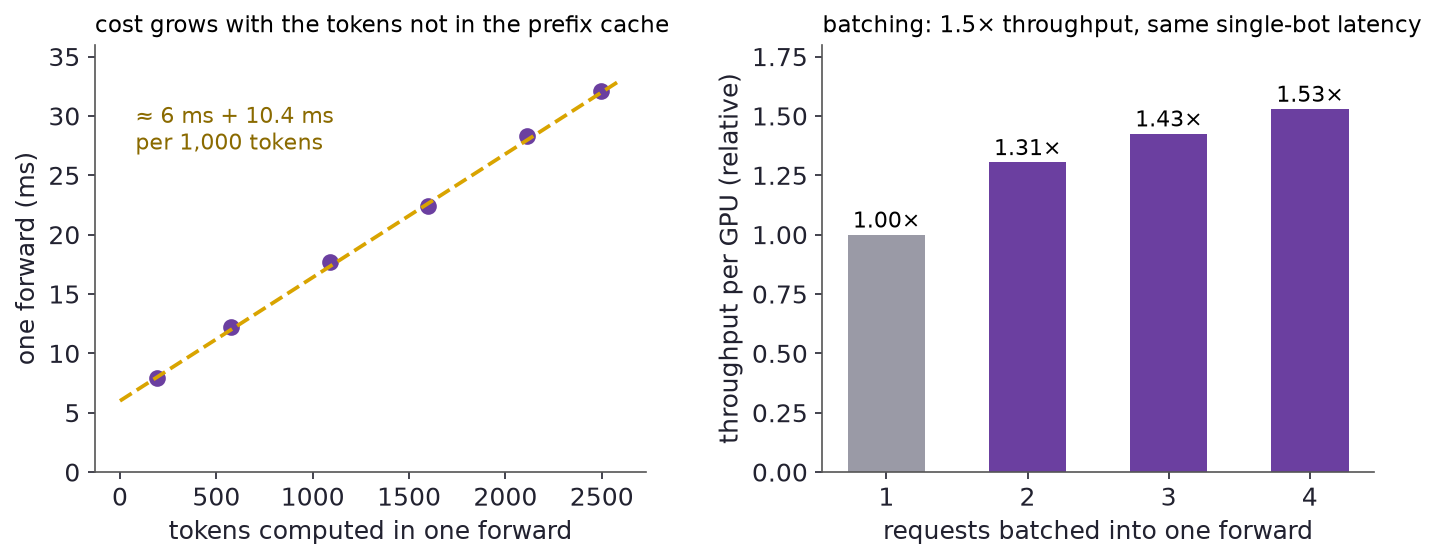
What a decision costs. About 6 ms fixed per forward plus ~10.4 ms per 1,000 tokens not in the prefix cache, which turns prompt design into a systems problem: of a bot’s ~1,760-token prompt only ~480 hit the cache, because the line that changes every step sat before a fixed section, and each bot’s name came in the first sentence. Harness authors and serving engineers have to design the prompt together.
Batching up to four requests in one forward gives 1.5× the throughput without slowing a single bot down, and takes a GPU from 43 to 58–64 steps a second.
Serving many Jevs
How It Performs
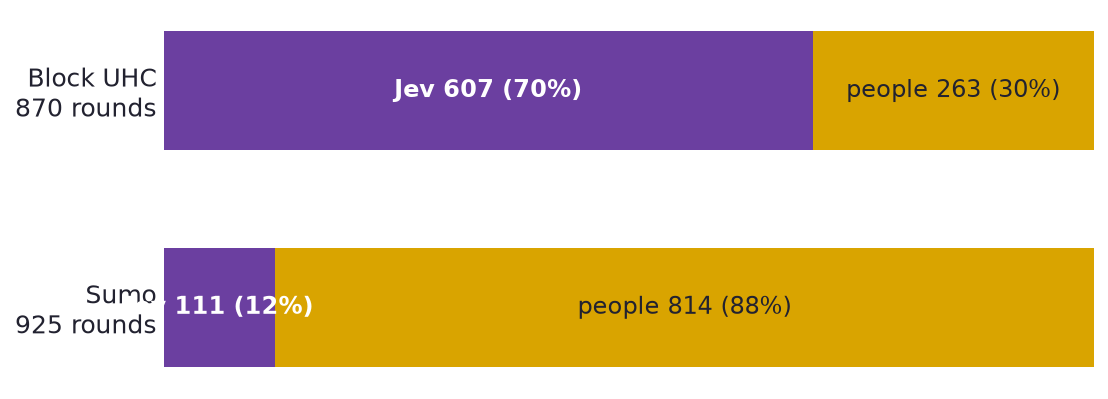
On September 26 we opened the server to the public, with the v10 harness. In the first ~32 hours (September 26, 19:05 UTC to September 28, 03:29 UTC), 54 people played 1,795 rounds against Jev in one-on-one modes (counted by Minecraft account, our team’s own accounts included):
- In Block UHC, a full fight with sword, bow, lava and blocks, Jev won 70% of 870 rounds (Figure 11).
- In Sumo, where the only move is to push, people won 88% of 925. Jev is a much better duelist than a sumo wrestler, and the Sumo rounds are the clearest to-do list we have.
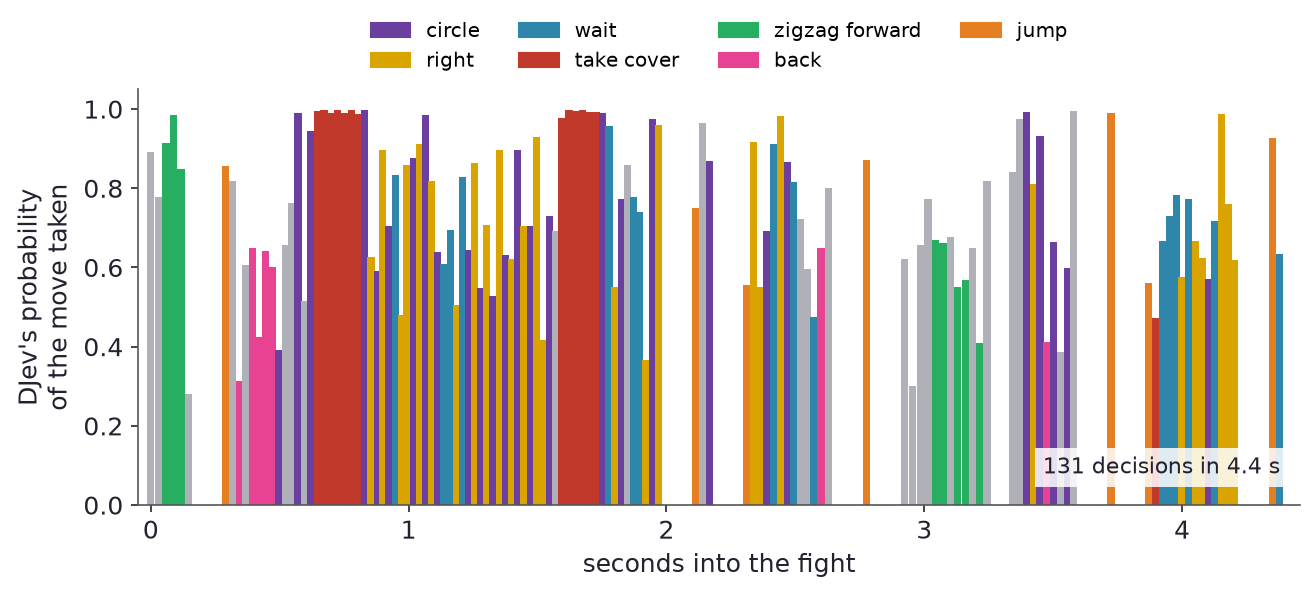
- Through the release, a decision took ~24 ms request to answer (Figure 12), fast enough for Jev to make 131 decisions in 4.4 seconds of one fight (Figure 13).
- Every decision left a log: more than 130,000 on our main cluster alone (our own test fights included), each with the state Jev read, DJev’s full distribution over the options and how the move turned out. This is the data the next version learns from.
Beyond the Game
MCJev is a game, but the constraint it tests is not: decide within tens of milliseconds while the world keeps moving, against a counterpart that adapts. Real-time response jobs face it, from flagging a payment before it clears to holding back a message before others see it, and so does physical AI: a robot arm picking parts off a conveyor cannot pause the belt while it decides. A game is neither a business nor a robot, and we do not know yet how far our results carry, but some of what we learned may: decide in one forward pass, put a slower head over a fast actioner, budget latency from the kernels to the network, log every decision with its outcome, and evolve the prompt with an LLM agent and human supervision in hours.
Next, we want to:
- Train on the logs. Jev plays with zero training today, and the logs are training data: supervised fine-tuning on the side that won, then reinforcement learning with the round’s outcome as the reward. Each decision already stores DJev’s full distribution over the options, which keeps the RL simple.
- Evolve against more than one opponent. Judge each harness version on a varied suite of fights, and run Jevs with different harnesses and checkpoints against each other around the clock, with human rounds anchoring the ratings.
- Go faster. NVFP4 weights, newer attention kernels and batching across Jevs on one GPU, to push a decision under 20 ms.
- Try physical tasks. Test which of these lessons hold up on a robot, for example on manipulation benchmarks such as RoboDojo, whose simulated tasks run on NVIDIA Isaac Sim, and how far the head can shrink to run on the robot itself, on a computer like NVIDIA Jetson Thor.
Play
Minecraft: Java Edition 1.9 or newer, a paid game (the server checks accounts, so you need a Microsoft account that owns it): Multiplayer → Add Server → mc.alexzms.com. In the lobby, right-click the compass and pick a mode, or run down the red carpet onto the iron pads. If you win, you will be on the leaderboard in the lobby.
- Block UHC: both fighters get a sword, a bow, lava and water buckets and blocks. Damage doubles at 60 seconds, and 30 seconds later both are dropped onto a small platform ringed by lava. 36 arenas run side by side.
- Sumo: a single platform and no weapons. Knock the other one off.
- 2v2: you and a friend against two Jevs, which share what they see.
Some records from the first 32 hours: the fastest anyone killed Jev in Block UHC took 1.2 seconds, and the median winning round for a person took 21.5 s. All 1,757 matches were recorded, 10.2 hours in all: both sides every tick and every swing, hit, arrow, block and death, 12.3 MB compressed.
Figure 14. 41 seconds of real rounds: a lava trap, a dash across lava at half a heart, a comeback at 4 HP.
Figure 15. Two real Block UHC rounds, players' view (looping clips). Left: Jev fights from behind its cover, trades hits and wins. Right: the player pours lava around a pillar; Jev comes through it, sword first, and wins in 19.4 seconds.
Acknowledgement
Contributors
Minshen (Alex) Zhang, Junda Chen, Yuanbo Yang, Yuxuan Zhang, Yi Sun, Shaoxiong Duan, Lanxiang Hu, Jiaqi Leng, Yulun Wu, Will Lin, Hao Zhang
Cite us:
@misc{mcjev2026,
  title        = {Real-Time Decisions with {Jev}: Self-Evolution and a 24 ms Engine on {NVIDIA} {Blackwell}},
  author       = {Zhang, Minshen and Chen, Junda and Yang, Yuanbo and Zhang, Yuxuan and Sun, Yi and Duan, Shaoxiong and Hu, Lanxiang and Leng, Jiaqi and Wu, Yulun and Lin, Will and Zhang, Hao},
  year         = {2026},
  month        = oct,
  howpublished = {Hao AI Lab blog},
  url          = {https://haoailab.com/blogs/mcjev/}
}